Preview
VOL 02Spark AI · Advisory Intelligence

What AI can't change

A conversation about leadership with someone who has led teams through wave after wave of technological change — and knows which fundamentals survive every one of them.

8 minute read
32 video clips
7 sections
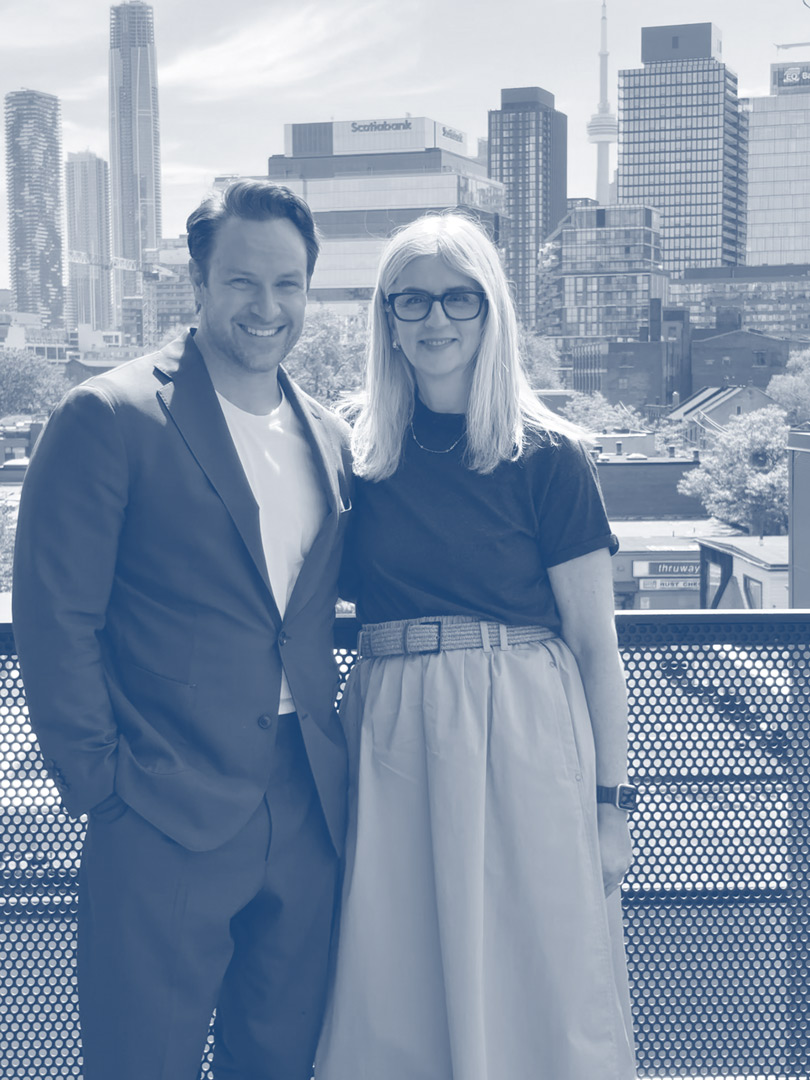
Georgia Woods and Mike ThomsonIn conversation

Every conversation about AI right now is a conversation about change — what it replaces, what it accelerates, what it makes obsolete by Tuesday. Georgia Woods wants to talk about the opposite. After decades building and leading teams through one technological shift after another — digital transformations, the move to agile, the arrival of the cloud, and now this — she has noticed that almost nobody is asking the more useful question.

That question is simple: what doesn't change? Not because the answer is comforting, but because it's where the leverage is. When the supply of answers becomes effectively infinite, the scarce and defensible thing is everything that isn't an answer — judgment, curiosity, trust, and the ability to look at a team and a market and generate a sense of why any of it matters.

What follows is less a forecast than a recalibration. The leaders who come through this well, Georgia says, won't be the ones who moved fastest on AI. They'll be the ones who never lost sight of what only a human can do.

★ Audio companion

Prefer to listen?

we turned this into a podcast
01 Section One

The question we're not asking

Start with where Georgia stands on AI, because it matters: she's genuinely energized by it. She describes it as a fantastic tool — an exponential augmentation of what a person or a team can do, and a chance to solve old problems in new ways. Nothing that follows is a brake on any of that.

It's the opposite. Precisely because the tool is this powerful, she finds it striking how rarely anyone asks the companion question — not what AI will change, but what it won't. Part of why we skip it is social: nobody wants to be seen as old school, behind the curve, the one who missed the boat. So a kind of group-think takes hold, and the fear of missing out does the rest.

The deeper version is organizational. Companies without real clarity on their purpose — on who their customer is and what that customer actually values — are, in her words, blowing in the wind. They reach for AI hoping it will answer the questions they were always meant to answer themselves.
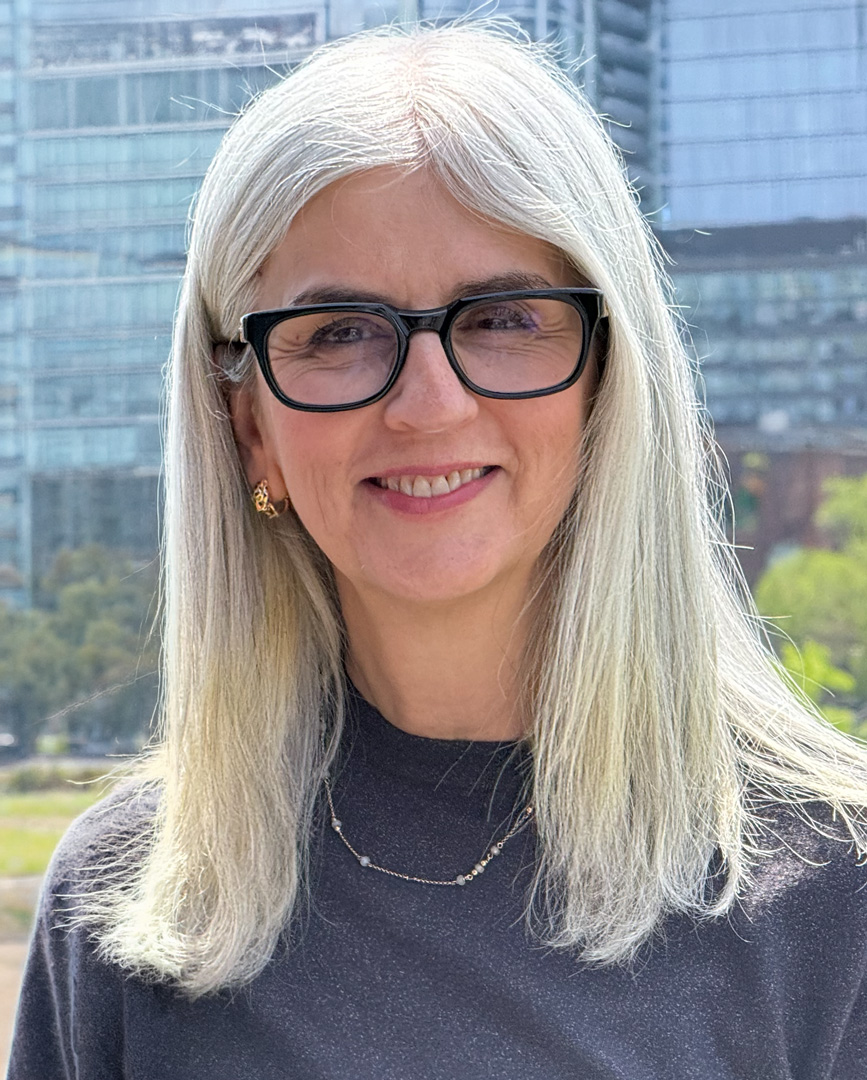
They're letting AI drive them — instead of being the ones doing the driving.
Georgia Woods

That's the through-line of the whole conversation. A tool is at its best when you point it at the right problems — and you can only do that if you're clear on what those problems are. The teams getting the most out of AI, in her experience, aren't the ones using the most of it. They're the ones who know exactly what they're trying to do with it.

So the fundamentals don't go anywhere. Purpose, the customer, how you create value — those are still yours to define, and they're what tells the tool where to go. Get them right and AI becomes an accelerator. Skip them, and even the best technology just helps you move faster in a direction you never chose.

02 Section Two

Leaders as enablers

Ask Georgia what has stayed constant about leadership through every transition she has lived through, and she doesn't hesitate: the leader as enabler. Relevant before, relevant now, and — she's confident — relevant long after the current wave.

An enabler builds strong, resilient teams, knows how to navigate the organization on their behalf, sets the tone, and then gets out of the way. They are not the person with all the answers. They are the person who creates the conditions in which the people who do have the answers can excel.

Her favorite illustration comes from hockey. Martin St-Louis, she notes, treats the locker room as the players' space. He steps in, sets the tone, and then leaves — because the players are the ones with the skill, and they're the ones who will figure out what to do.

A leader doesn't need all the answers. They build the team that has them — set the tone, and get out of the way.
Georgia Woods

The contrast she draws is with the manager — the functional, check-the-box operator who can tip into micromanaging, into not quite trusting the team, into always needing to be on top of the work. Some of that, she suspects, comes from a quiet lack of confidence. The enabler's confidence runs the other way: they don't need to hold every answer, because they believe in the people who do.

Can you teach this? It's hard, she admits. You can hire for it and look for it, but mostly it spreads by role-modeling — leaders who understand the purpose of the place, who are grounded in what matters to customers, demonstrating it until it permeates down through the organization. It starts at the top, or it doesn't start at all.

03 Section Three

Replaced vs. irrelevant

One distinction Georgia kept returning to reframes the fear most people are carrying. Everyone talks about being replaced by AI. The word she thinks matters more is irrelevant — and the two are not the same.

When you're replaced, she explains, the value of what you did is still there. The work still has to be done; someone or something else simply does it. When you become irrelevant, what you were doing has no value anymore. The world keeps moving and the thing simply doesn't matter. That, she says, is the bigger risk — because as humans, we need to feel that what we do has value.

I can't automate learning. I can't automate growing. I can't automate thinking. I can't automate visioning.
Georgia Woods

For leaders, the practical move is to start with the work itself. What is the work? How will it be different with AI embedded across it? That is the real conversation — not a panicked sweep to delete jobs that look redundant, only to discover later they weren't, and that you've quietly sabotaged your own economics in the process.

And what makes a leader irrelevant? The fastest route, Georgia says, is reverting to manager behaviors: authoritative, measurement-obsessed, distrustful of the team. The second is becoming so inward-focused and navel-gazing that you miss the trends and the shifts in sentiment entirely. (Her own early-warning system: watching how her kids and grandkids make decisions and use technology — a live preview of where things are heading.)

AI is brilliant at synthesizing information and presenting it back in a consumable way. But the visioning, the learning, the deciding what kind of world we want to build — those remain human. The goal, she says, is for us to be driving AI, not the other way around.

04 Section Four

The case for curiosity

Given a list of the human capabilities that matter most — analytical thinking, resilience, adaptability, curiosity — and asked which is the most under-invested, Georgia chooses without pausing: curiosity.

The reason it's neglected is the reason it matters. Curiosity is hard to measure. Business rewards what it can quantify — outcomes, metrics, return on investment — and curiosity refuses to cooperate. It's about exploring, experimenting, wondering how something works and whether you could make it work better. You can't put a two-week box around it and expect it to perform on schedule.

Curiosity is the hardest thing to measure — which is exactly why we keep under-investing in it.
Georgia Woods

She describes it as looking at the world with fresh eyes — without bias, without the baggage of how things have always been done. It's the way her granddaughter sees everything: no preconceptions, an endless chain of why, and a knack for noticing what the rest of us have stopped seeing. We start out wired for it. Then we accumulate habits and points of view so entrenched that they replace our ability to explore, and curiosity quietly atrophies.

Which is why environment matters so much. You can't book curiosity for 2 p.m. on a Tuesday. It needs space, and it needs the right stimulus — which is partly why teams take themselves out of the building entirely, to offsites, to break the pattern. For Georgia, the stimulus is usually other people: conversations spark her ideas in a way a regimented calendar never will. AI can help here too, surfacing perspectives at the click of a button. But the wonder — the childlike, unprompted why — is still ours to protect.

05 Section Five

The not-so-hidden agenda

Georgia calls relationship building non-negotiable. But she knows the phrase carries baggage — people hear it and picture networking, politicking, the faintly sleazy work of trying to be liked. That's not what she means at all.

What she means is simple. Be clear about your own goals. Share them openly. Then ask the people around you what problems they're trying to solve, and how you might help. Do that, she says, and ninety-nine times out of a hundred people open up — and you've found the common ground that real relationships are built on. Trust accumulates from there.

Knowledge is power? It doesn't work that way anymore. Your knowledge has a very limited lifespan in this world.
Georgia Woods

She calls this her not-so-hidden agenda — and she means it as the opposite of the old instinct to hoard. The people who guard their knowledge as leverage have misread the moment; things change too fast for hoarded knowledge to hold its value. The most successful people she has seen are the open ones, who say plainly what they're working on and what they need.

There's a related idea about networking and the work itself. You don't build a network as a separate activity, she says — you build it by doing your job well, in the open, alongside other people. Nobody works in isolation. Do the work visibly and the network is the byproduct.

The hard part is vulnerability. Sharing your goals exposes you a little; showing that you don't have all the answers is genuinely difficult in a corporate environment built on self-protection. But that exposure is the mechanism. Trust is reciprocal, and someone has to go first. Usually that someone is the leader.

06 Section Six

Presence, reframed

Presence is one of those leadership words people assume they understand. Georgia wants to take it apart, because the version most people picture — the big, commanding, fills-the-room presence — is, in her experience, the fastest way to get a room to go silent.

That command-and-control bravado is the old model, and she's glad to see the back of it. Interestingly, hybrid work has helped. On a screen, everyone gets the same size tile. The person who used to dominate by sheer physical force has, as she puts it, half a chance of being measured instead on what they actually say and ask. The playing field leveled, and she likes it.

That big, commanding presence everyone admires? It's the fastest way to get a room to go silent.
Georgia Woods

That said, presence hasn't disappeared — it's changed. When a team is physically together, the move is to take full advantage of it, because so much routine work can now happen remotely. Some things still need a room: difficult conversations, real brainstorming, building culture, the impromptu let me just go ask Mike moment that never survives a calendar invite. And part of the job, in any room, is reading it — noticing who has something to say and hasn't said it, and making space for them.

Then there's the discipline she worries is quietly dying: pre-socializing. For anything that genuinely matters, you do the work before the room — you walk people through your thinking one-on-one, give them time to actually consider it, and surface their concerns early. Skip it, and a first-time audience gives you a reaction instead of a thoughtful response, plus twenty follow-ups that exist only because nobody was prepared. You may still go the way you intended. But you'll have built support, gotten real feedback, and — not incidentally — built another relationship along the way.

07 Section Seven

Purpose as the filter

Purpose runs through everything Georgia says, and she's clear about why it matters more now, not less. The world is more complex, the choices more numerous, the noise louder. Clarity of purpose is what lets you cut through it.

She describes purpose as a filter — the thing that lets you screen out what doesn't matter, isn't relevant, isn't yours to chase. Organizations have always struggled to say no; they watch competitors and conclude they have to do the same thing, even when it has nothing to do with their core. She points to Steve Jobs, who reportedly said no far more than he said yes — because anything not tied directly to Apple's product and customer experience didn't make the cut.

Purpose is a filter. It's what finally gives you permission to say no.
Georgia Woods

The risk she sees with AI is precisely here. Quantity has gone up dramatically, and people now assume quality will simply keep pace. It won't. Diluting your effort across more things you were never meant to do isn't progress; it's the old trap, accelerated.

Purpose is also how she reads the younger workforce — the people she mentors, and her own kids. They are not less committed or less willing to work hard. They simply won't accept four decades in a cubicle without meaning behind it. They value flexibility and they value work that matters, and the interview has become a two-way street: they're deciding whether to work for you as much as you're deciding whether to hire them. Leaders who treat that as a threat will watch that talent walk.

The answer, she says, is to make the linkage visible — to build team objectives that tie directly back to the organization's purpose, so a person can look at what they did and see that it mattered. Because in the end, we all want the same thing — to have an impact, and to see the connection between what we do and why it matters.

— and finally —
"My greatest value is creating meaning, direction, and human connection. AI is in the backdrop — but lead AI, not the other way around."
Georgia Woods
Georgia Woods
Spark
Advisor
About the advisor

Georgia Woods

Senior Technology & Transformation Executive · Spark Advisor

Georgia has spent [decades / number] leading teams through some of the most significant technology transitions of the era — from the build-out of digital banking and the shift to agile ways of working, through to the arrival of AI. [Verify / replace with Georgia's confirmed title, institution(s), and tenure.]

She now advises organizations on leadership, transformation, and the human side of change, and mentors students and early-career professionals on building careers that last. Her throughline, across all of it, is a conviction that the fundamentals — purpose, trust, curiosity, and human connection — matter more in the age of AI, not less.

Found this useful?

Spread the word

share it with someone who'll get it